The Pricing Playbook for Farm Stores
By Michael Kilpatrick ·
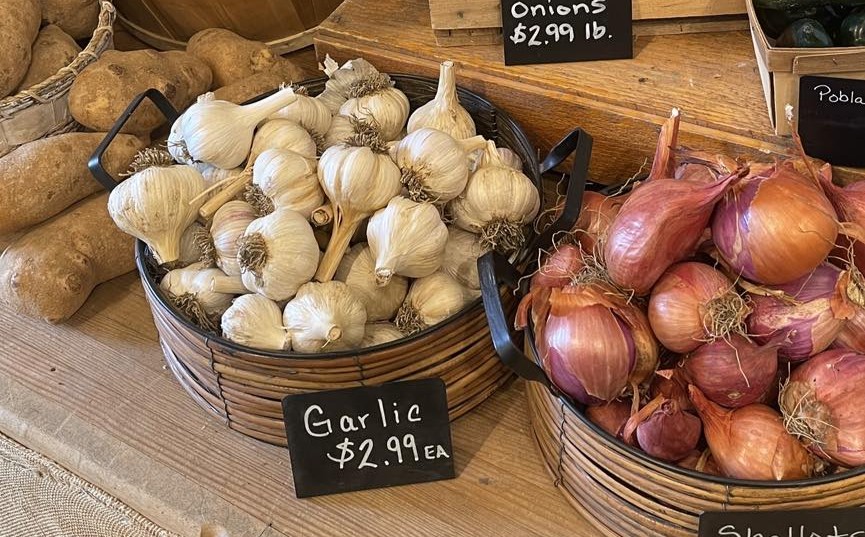
Pricing is where a lot of farm stores quietly bleed out, even if traffic and sales are consistent. It’s something we’re always evaluating at Farm on Central. We want to keep our food affordable for the average family…but the overhead for running a farm store isn’t cheap. So we have to strike a balance that keeps both us and our customers fed. You don’t find that balance by guessing. When you run a farm store, you can’t afford to price based on rough estimates, gut feeling, or competitors’ prices. You can kind of get away with it at farmers markets. But not when you’re paying utilities and staffing a building. The pricing that works for us at Farm on Central may not necessarily work for your farm store, depending on your overhead. But we’ve figured out the numbers that work for us, and we have it down to a system now to where pretty much anyone who knows the product cost could calculate our retail price.
Markup vs. Margin: Get This Straight First
Before anything else, you need to know the difference between markup and margin. Sometimes I see people use these terms interchangeably, but they are not the same thing. Markup is the percentage you add on top of your cost to arrive at a selling price. If you buy something for $2 and sell it for $3, that’s a 50% markup. Margin is what percentage of the selling price you actually keep. So on that same $2 item sold for $3, your margin is 33%—because you’re keeping $1 out of $3. Same transaction. Very different-looking numbers. This is why you’ll sometimes hear a farm store owner say they’re running a 50% markup and another say they’re running a 33% margin, and both are describing the exact same pricing. If you’re ever comparing notes with another farmer or talking to a vendor, make sure you both know which language you’re speaking. At Farm on Central, we work primarily in margin terms. It’s more consistent with how the broader retail industry talks about pricing, and it’s easier to compare against benchmarks. Our minimum margin across the store is 30%, and plenty of our products run 50-60%.
Why Margin Matters More Than You Think
Here’s something that doesn’t get said enough: the lower your margin, the more you have to sell just to stay in the same place. If you’re running a 10% margin on a product, you have to sell three times as many units as you would at a 30% margin to generate the same profit. That’s three times the stocking, three times the handling, three times the checkout transactions—for the same return. At some point, your low-margin products are actually costing you more than they’re making you, once you factor in the labor and time involved. We know a farm market about an hour north of us—great people—that doesn’t charge vendors any markup at all. When they’ve stocked our product, we’ve gotten 100% of the sale, and that’s been great for us. But it’s not great for them. They’ve spent money building the store, stocking it, staffing it, and paying for electricity. All of that has to come from somewhere. If you’re not taking a margin on what moves through your store, you’re running a charity, not a business. Keep your margins healthy. They’re how you stay in business.
Perishables Need Higher Margins
This is the one pricing rule that is non-negotiable, and it’s the most important if you primarily grow produce: anything that can spoil needs to carry a higher margin than anything that can’t. The reason is simple. You’re not going to sell every piece of produce that comes through your store. Some of it is going to go bad before it sells. Your pricing has to account for that shrinkage. For fresh vegetables, we aim to double our money. If our cost is $1.20-$1.50 a pound, we’re selling them at $2-3 a pound. That accounts for the reality that some percentage of that product isn’t going to make it to a customer. Potatoes are a good example of how this works in practice. We’ll sometimes buy them at 80¢ a pound and sell them at $2-3 a pound. The same logic applies to meat, dairy, and anything else with a short window. The more perishable the product, the higher the margin needs to be.
Shelf-Stable Products: Lower Risk, Lower Margin
For products that don’t spoil—shelf-stable goods, frozen items, dry grocery—you don’t need to build in as much cushion for loss. The risk is much lower. That said, “lower risk” doesn’t mean “no margin.” For shelf-stable and frozen products we bring in wholesale, we’re typically looking at a 30-40% markup. If we buy something for $7, it goes on the shelf at $10. That’s our floor. The product can sit there for a while without going bad, but it’s still taking up space, tying up capital, and requiring someone to stock and manage it. One thing to watch with dry grocery: product does eventually expire, and if you have mice—and at some point, most farm stores do—you’ll lose product that way too. Factor that in.
How Your Categories Compare to the Grocery Store
It helps to know what the broader grocery industry is doing, because it gives you a baseline for what’s normal in each product category. Grocery stores, for all their scale and efficiency, are not particularly profitable businesses. They’re fighting hard for thin margins across enormous volumes. You’re not a grocery store. You have the advantage of selling directly, building relationships, and commanding a premium for quality. But the category benchmarks still tell you something useful. Here’s roughly how margins shake out by category in conventional grocery: Meat, seafood, and dairy: lowest margins in the store. These are protein categories that drive traffic but are expensive to source and highly perishable. Expect thin margins here. Produce and floral: higher than proteins, because there’s more room to price for quality and perishability. Bakery: typically the best margins in a grocery store. Baked goods carry high perceived value, and customers will pay for quality. That said, if you’re sourcing your baked goods from an outside baker rather than making them yourself, don’t expect to hit those textbook bakery margins. Our bread margin runs closer to 40%, which we’re fine with because we know the quality justifies the price. Dry grocery: lower margin but lower risk. Things sit on the shelf, they don’t expire quickly, and there’s little shrinkage. A 30-40% markup is reasonable here. The broader point: not every category in your store will carry the same margin, and that’s fine. What matters is that your overall margin picture is healthy, and that you’re not letting low-margin products crowd out the ones that actually make you money.
Know Your Highest-Margin Products
Every store has a few products that quietly carry a disproportionate share of the margin. Find them, make them highly visible, and market them like crazy. Our single highest-margin product at Farm on Central is our sourdough starter. It costs us maybe 10 cents to produce. We sell it for $13. Is that a huge revenue driver for us? No. But it’s the kind of product you want visible, you want stocked consistently, and you want customers to know exists—because every sale of it is almost pure margin. On the other end of the spectrum, we know that things like soil and compost carry around a 20% margin for us. We bring compost in because our customers want it and it drives traffic, but we don’t build our pricing strategy around it. We sell it knowing it’s a low-margin item that serves a different purpose. Firewood is another example. We tried it, it was low margin, and it didn’t move well for us. We ended up burning it ourselves. Not every product that seems like a good fit for a farm store actually is, which is why you need to stay on top of your numbers. The 80/20 principle applies here. Focus the bulk of your inventory—and your energy —on the high-turnover, healthy-margin products that are actually keeping the lights on.
Bulk Pre-Buy Programs
One of the best pricing strategies we’ve implemented at Farm on Central is our annual bulk pre-buy program. And it’s worth understanding because it solves two problems at once: it gives customers an unbeatable price on something they genuinely want, and it drives significant traffic to the store. Here’s how it works: We identify high-quality seasonal products that we don’t grow ourselves but can source in large volume—peaches, citrus, maple syrup, blueberries, etc. Because we’re buying in bulk, we negotiate a significant discount from the supplier. We then offer those products to our customers via pre-order at a price that’s still a great deal for them but gives us solid margins. Peaches are the clearest example. We’ve paid as little as $14-15 a box delivered. We sell those boxes at $29.95 (a 100% markup). But that same box goes for $67 at the Peach Truck (our competitor). So our customers are getting an exceptional deal, we’re making good money on it, and everybody wins. The traffic piece is what makes this really powerful. During the weeks when the bulk shipment comes in and customers come to pick up their pre-orders, our overall store sales go up. People come in to grab their peaches and leave with eggs, a loaf of bread, or something for dinner. The pre-buy program is essentially a built-in reason for customers to come to the store. The logistics are pretty simple as long as you have someone to stay on top of orders. Customers pre-order online. When the shipment comes in, we go into our system and mark orders as ready for pickup. Anyone who doesn’t claim their order within two weeks forfeits it, and we sell it to someone else. We run three rounds of peach pre-buys across the summer, two maple syrup runs, a citrus run in December and January, and blueberries in July. If you’re not doing something like this yet, it’s worth thinking about what seasonal products in your area you could source at volume. If you can offer a price your customers can’t find anywhere else for fresh, seasonal fruit, it can be a huge store magnet.
On Raising Prices
Costs go up. Labor goes up. Equipment goes up. At some point, your prices have to go up too, and there’s no point pretending otherwise. (Just look at gas prices right now.) Generally, it’s best to raise prices gradually and frequently rather than doing one big across-the-board increase. Bump a few products up every couple of months. Customers notice a sweeping price increase. They tend not to notice when the arugula goes up 25 cents. Our sourdough is now $10.99 to $11.99 a loaf. People pay it without hesitation, because they know it’s good bread and they know we’re not cutting corners to make it. That’s the thing about pricing at a farm store: your customers came to you in the first place because they value quality. Don’t be afraid to charge for it. If you’re consistently the lowest price around, that might feel safe, but it usually just means you’re undercharging.
The Bottom Line
Pricing isn’t something you figure out once and forget. It’s something you pay attention to, evaluate regularly, and adjust as your costs and your business change. Know the difference between markup and margin. Set a floor and stick to it—30% margin minimum for us. Price your perishables to account for what you’re going to lose. Know which products are carrying your margins and make sure those products get the attention they deserve. Price like a business. Because that’s what you’re running.