How to Plan a Farm Store, Without Wasting Money on the Wrong Things
By Michael Kilpatrick ·
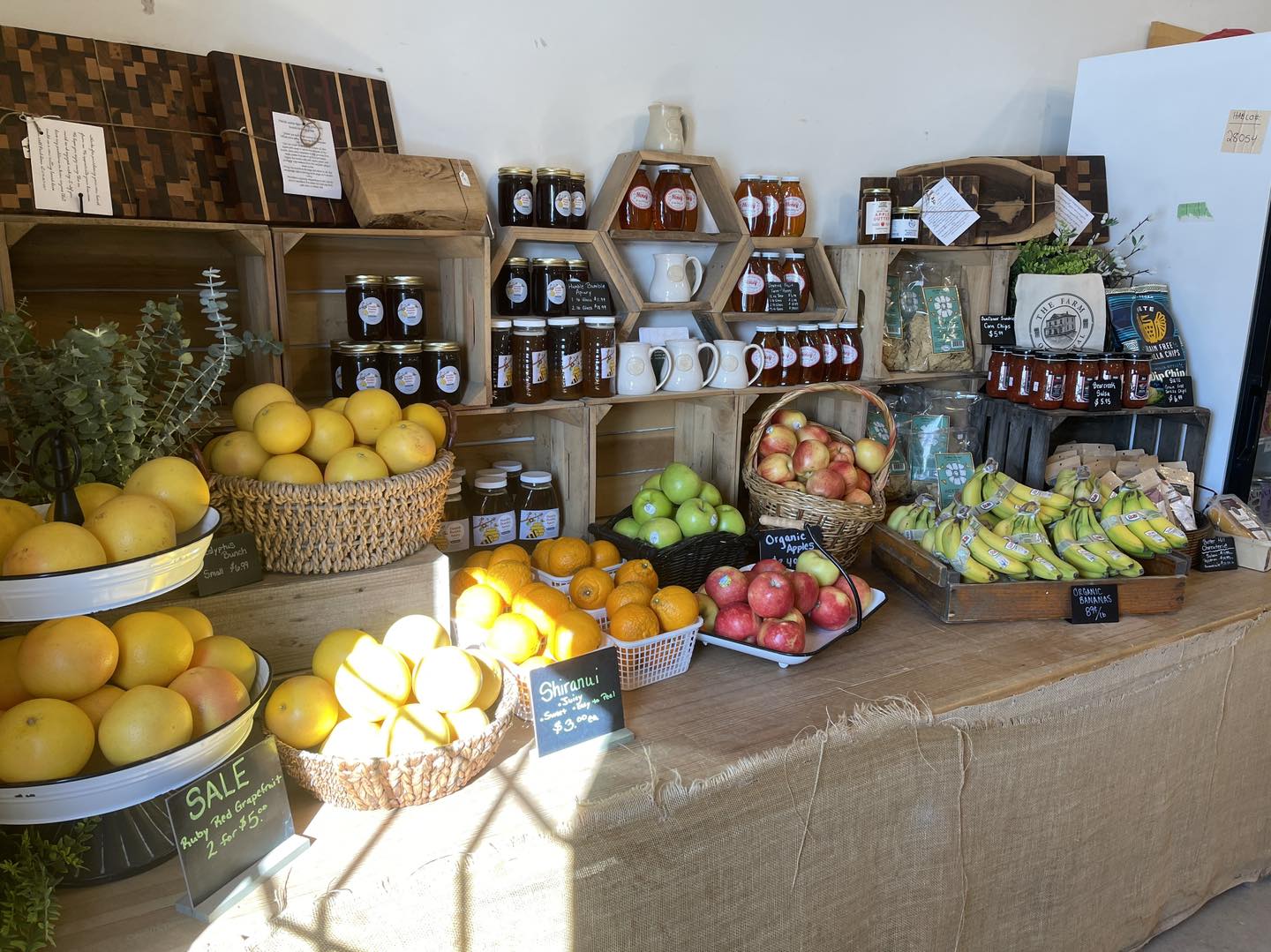
Most farmers who are thinking about starting a farm store spend way too much time worrying about the wrong things. The paint colors and shelving systems...those things can wait. What matters way more is this: Does what you're building match the needs of your business and customers? Before you spend a single dollar on a physical space, there are a lot of things you need to ask yourself regarding logistics, functionality, and what kind of customer experience you want to create. If you skip these questions, you risk building the wrong thing for your business and your market.
Getting Started: The Big Questions
How long do you want customers to stick around? That might sound like a weird place to start, but it matters a lot. If you want people to linger—let the kids run around, check out the animals, just hang out for a bit—you need a very different setup than if you just want people to grab their eggs and go. A cramped little stand is not a great “third place.” Know which one you’re building before you start building it. Are you going to staff it, or run it unmanned? Honestly, if you're starting from scratch, I’d recommend starting unmanned. Keep your overhead low, figure out what actually sells, build up your customer base a little, then add a person when the revenue justifies it. Hiring someone before the sales are there is just a fast way to eat into your margins. Open air or enclosed? Seasonal or year-round? These aren’t just aesthetic questions. They affect your regulatory situation, your refrigeration options, what you can realistically sell, and how much you’re spending to get started. An open-air stand in Ohio in January is a completely different animal than a closed, heated space. Plan accordingly. What are the limits or advantages of your space and location? Assuming you already have a farm property, these are factors you can't change. So you have to think about how to use them to your advantage. Consider your visibility from the road, proximity to town, ease of parking, and square footage available for the store. What kind of building is going to make the most sense logistically? And—this is a big one—do you have electricity? Because this shapes almost everything else. The products that bring people back week after week—greens, dairy, eggs, meat—need refrigeration. If you don’t have power, you’re fighting that constraint from day one. It’s not a dealbreaker, but go in with your eyes open. These questions are the ones that shape what kind of store you need to build.
What Are You Actually Building?
Farm stores exist on a pretty wide spectrum, and the right setup for you depends almost entirely on your location, your product mix, and where you are in the business. Here’s how I think about each level.
The Open-Air Stand
A table and canopy, or a roadside stand with a cash box and a few signs. This is your most basic version, and it works great for products that can handle sitting outside—corn, tomatoes, flowers, pumpkins, things with a few days of shelf life. Your barrier to entry is almost nothing, overhead is minimal, and you can be up and running faster than any other option. One thing most people don’t think about until it’s too late: how do you close up and secure it at night? You'll want shutters that lock, an LED light (on a solar setup if you don’t have power), and a sheltered spot for overflow stock. Small stuff, but it makes the whole operation feel a lot more legitimate—and it protects your product.
The Shed or Converted Structure
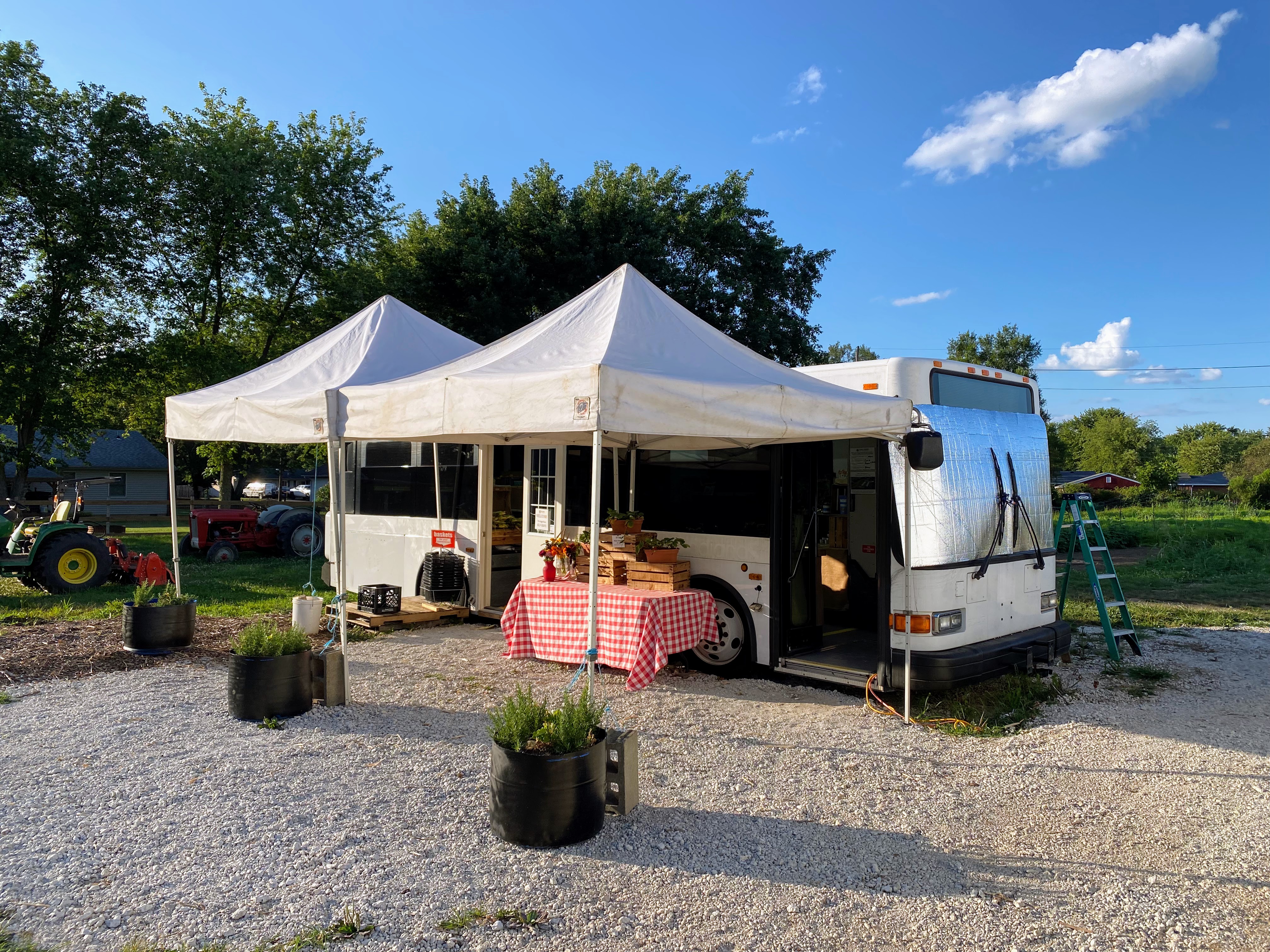
This is where most serious farm stores should probably start. A shed, a converted building, something enclosed. You get security, weather protection, the ability to run electricity, and enough space to actually merchandise what you’re selling. If you want to operate year-round or sell anything that needs refrigeration, you really need to be at this level or above. Here’s a tip if you’re trying to keep costs down: call every shed dealer in your county and tell them you’re looking for a repo. Larger sheds get repossessed more often than you’d think, and you can save $1,000-2,000 buying one that someone else couldn’t keep up payments on. Another option here is a converted bus. That's what we did at Farm on Central, and it was a great temporary solution until we grew large enough to need a permanent building.
The Full Store
When you’ve outgrown the shed and the sales are there to justify it, you’re building a real retail space. Same principles, just bigger—and the cost of getting the layout wrong is higher. Before we finalized our layout at Farm on Central, we sketched the whole floor plan and then made little paper cutouts to represent customers and physically moved them through the space. Where do people come in? Where do they naturally flow? Where does the checkout line back up—and does it block the entrance when it does? It sounds a little silly but it’s genuinely useful. Our store is small, so we have to utilize the space as best as we can. Our layout: covered front porch for outdoor display, main entrance into the store, CSA cooler just inside where members pick up their shares. Display shelving and tables fill the center and the edges, so customers move through the store in a clockwise circle, keeping the flow of traffic in one direction. There's a walk-in cooler so customers can reach in from the front while our team restocks from the back. The checkout counter is positioned so we can see the whole floor. Office and back stock are behind the store. We’re pretty happy with it. Wouldn’t change much. One thing that caught us off guard: checkout needs way more space than you think. We’re at the point now where customers come in with multiple baskets and drop $100-200 at a time. A cramped checkout counter creates a bad experience right at the moment you want to leave a good impression. Build in more room than you think you need.
The Four Things Every Store Needs—No Matter What
I don’t care if you’re running a folding table under a canopy or a 2,000 square foot store. There are four things you absolutely cannot operate without. Everything else you can figure out as you go. A checkout area. People need to know where to pay. Sounds obvious, but you’d be surprised how many setups make customers wander around looking for someone to hand their money to. Signage. Signs that tell people what things are, what they cost, and a little something about who you are. If customers don’t understand what they’re looking at, they don’t buy it. Tables or shelves. Product on the ground is product that doesn’t sell. Get it up where people can actually see it. Storage. Somewhere to put your pricing gun, pens, bags, paperwork—whatever accumulates. Even if it’s just a burlap curtain hiding a shelf underneath your table, you need this. Stands without designated storage end up looking like a yard sale, and your staff can never find anything. Those are the bare essentials. Refrigeration, fans, a bathroom—all of that can come later, as your operation grows and as your situation calls for it. Start with what’s essential. (However, do consider retail/food establishment codes. For example, we can only sell prepackaged foods in our store, and have to sell our slushies and sandwiches from a food truck we have parked right outside the store. To bring everything under one umbrella, we would have to move to the next level of a retail-food establishment, which involves expanding the bathroom to be ADA-compliant and making other major changes...things we never accounted for in our original plan. So, think ahead. You can start small, but also consider what you want your store to look like in the future.)
No Electricity? Here’s What Actually Works
A lot of farmers want to start without running power to their stand. I get it, but I don't recommend it. You're giving up greens, microgreens, herbs, dairy, eggs, meat—the stuff that brings people back every week. Without power, you’re pretty much limited to shelf-stable and field-durable products, at least in the beginning. If you genuinely have no power access but need to keep cold-sensitive product, here’s the approach: don’t try to cool things down at the stand. Bring product that’s already chilled and just keep it from warming up. Use coolers with frozen ice blocks, with a towel between the ice and the product so it's not right against the ice. Some smaller commercial coolers run on very little power and can work off a single solar panel with deep-cycle batteries. If you want customers to see what’s inside without opening the cooler, you can cut a hole and fit plexiglass over it—just know you’ll be wiping that down constantly because it fogs up. But realistically, if there’s any way to get even a little power to your setup, it’s worth it. When we were running out of a tent in our backyard, we just ran an extension cord and plugged in a small cooler. That was it. Simple. Misters and fans can help too, but both require power. And if you have enough power for misters and fans, you’ve got enough for a small cooler—which is the better investment anyway.
Refrigeration: Start Cheap, Upgrade When You’re Ready
This is an area where people tend to either overspend early or underspend too long. Here’s roughly how we’ve progressed. Used beverage coolers—the kind you’d see at a gas station holding drinks—are a totally reasonable place to start. Pick them up for $400-600. They work, they’re easy to find, and if you outgrow one or it dies you haven’t lost much. Step up from there is a two or three-door true commercial cooler. Used, those run $1,300-1,600. Clean the compressor and they’ll run basically forever. That’s where most mid-size farm stores should be operating. What we don’t recommend: household refrigerators on the retail floor. Two reasons. One, if you’re running as a level one food establishment they’re not allowed under health code. Two—and honestly this matters more in practice—customers can’t see what’s inside. People want to browse before they commit to opening a door. With a commercial glass-door cooler they can look without touching, and they only open it when they’re ready to grab something. That’s worth paying for. Our biggest refrigeration upgrade was blowing out a wall and putting in actual walk-in cooler panels and glass reach-in doors—the kind you see in grocery stores. Single doors run $1,000-2,000 each. We drove up to Cleveland and bought a whole set. It was expensive. But it completely changed how we operate—our team stocks from the back, customers grab from the front. Worth every dollar, but only because we reached the stage where our store was making enough to pay for it. Scale as you need, without overspending on day 1.
Start Simple—And Mean It
We started Farm on Central with a tent in our backyard, a small cooler on an extension cord, a cash box. That was it. From there we moved into a converted bus, ran that for two years, and then built the store when the customer base justified the investment. I tell you this not because the tent-bus-store journey is the recommended path, but because the principle behind it matters: every stage was funded by the stage before it. We didn’t build the store and then hope the customers would show up. We ran the bus until the revenue told us it was time. We also started with maybe fifteen or twenty items—mushrooms, salad mix, microgreens, strawberries, eggs, milk from a local producer, and a few others. Now we carry over 500 items in the store. But starting with 500 items would have been a disaster. We wouldn’t have known what to stock, what to charge, or what our customers actually wanted. Starting simple and building up gave us the information we needed to make good decisions at every step. Whatever your version of “simple” looks like—a basic stand, a shed, a small space in an existing structure—start there. Earn your way to the next level.